
M-Seal, Silicone or Araldite: Which One Fixes Your Leak?
Choose by where the water comes from. If a pipe has a crack or pinhole, use M-Seal. If the drip comes from a threaded joint, use Teflon tape. Use silicone sealant for the gap behind a basin. Use Araldite to glue a broken part, and Crack-X for a crack in plaster.
People ask for "M-Seal" for every leak, but the products work in different ways. Epoxy putty and Araldite set hard. Silicone stays soft and moves with the joint.
- A drip from the body of a PVC pipe needs a putty that sets hard around it (M-Seal).
- A drip from the thread of a tap or an angle valve needs tape on the thread.
- Water that runs behind the basin needs a flexible bead of sealant.
- A hairline crack in the wall plaster needs a crack filler, not a pipe product.
Write down where the water comes from before you buy. That one note saves a second trip to the shop.
What Is M-Seal and How Do You Use It on a Leaking Pipe?
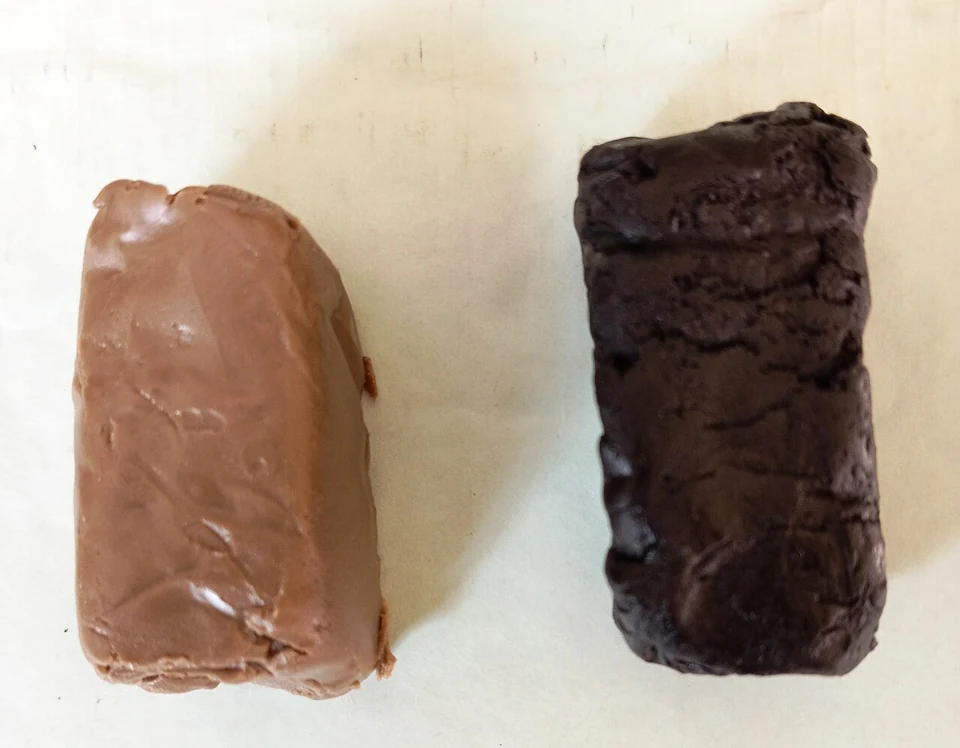
Photo: Salil Kumar Mukherjee, CC BY-SA 4.0, via Wikimedia Commons
For a crack or pinhole in a pipe, M-Seal makes a hard patch. You knead equal amounts of its resin and hardener until the colour is even, then press the putty over the leak. It stays workable for about 15 minutes and hardens fully in one to two hours (M-Seal).
First shut the water and dry the pipe. Clean off oil and dirt, rub the surface with sandpaper, and wipe it with acetone if there was grease. Smooth the putty with a damp cloth within 20 minutes. Do not hold the mixed putty in your hand.
Once hard, you can drill or file it. Kneading starts a chemical reaction that gives off heat, so a warm lump is normal (Wikipedia).
For one pinhole under the kitchen sink, the small pack does the job. The M-Seal 60 g pack cost ₹25 on HandyPanda on 20 November 2026, and 250 g cost ₹98.
Where Does M-Seal Stop Working?
M-Seal has limits. Its working temperature limit is 80° C, and the hard putty is far weaker than steel. So treat it as a patch for a crack or a pinhole, not as a new piece of pipe. A joint that carries load or a line that runs very hot needs a plumber.
The 80° C figure is on the M-Seal page for its General Purpose putty (M-Seal). A cold-water line from the roof tank is well inside that limit.
Epoxy putty is much weaker than steel in tension and in shear (Wikipedia). A patch on a pipe that bends, or that someone steps on, can crack again.
The M-Seal page we read does not say the putty is safe for drinking-water lines. If the leak is on the line that feeds your kitchen tap or RO, ask your plumber to cut out the damaged part and fit a new length of pipe.
When Does Teflon Tape Fix a Leak?
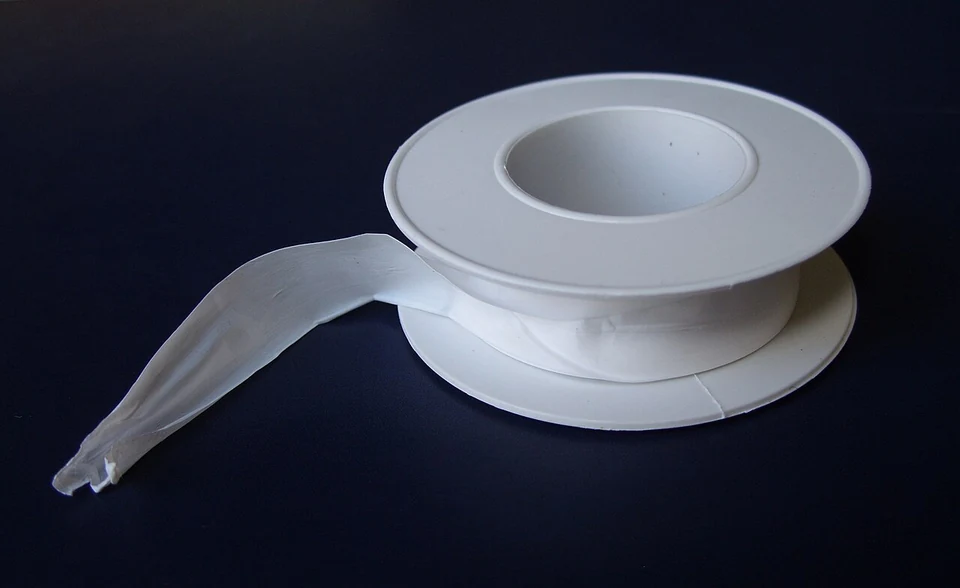
Photo: Bbarda, CC BY-SA 4.0, via Wikimedia Commons
Teflon tape fixes a leak at a threaded joint: a tap, an angle valve, a geyser connection or a pipe nut. It is a thin PTFE film that fills the gaps between the threads. It cannot seal a crack in the pipe itself (Wikipedia).
Clean and dry the thread first. Wrap the tape around the male thread, clockwise, in the direction of the thread. Keep it firm but do not stretch it hard (M-Seal).
More tape is not better. Too many turns can stop the two threads from screwing in all the way, and the joint can still drip. If the old tape is torn or bunched, take it all off and start again.
Keep a roll in the toolbox for the next dripping tap. A roll of Teflon tape cost ₹16 on HandyPanda on 20 November 2026.
Acetic or Neutral Cure: Which Silicone Sealant Goes Where?
Look at the tube before you pay, because silicone sealant comes in two types. Acetic cure silicone suits glass, aluminium, ceramic and sanitary joints indoors. Neutral cure silicone also bonds to brick, concrete and steel, and it stays flexible over a wider heat range.
Acetic cure silicone gives off acetic acid as it cures, the acid in vinegar (Wikipedia). Keep the room open while it cures. Pidilite lists what its acetic cure Feviseal GP is not for: PP, PE and PTFE plastics, zinc, brass, painted surfaces and white stone (Feviseal GP data sheet).
So a basin or a shower glass joint can take either type. A joint on brass, zinc or white stone rules out acetic cure. Feviseal Neutral Pro stays flexible from -40° C to +150° C (Pidilite).
The GP sheet asks for at least 3 days of cure, and the Neutral Pro sheet for at least 7. Do not run the shower on a fresh bead.
Where Does Silicone Sealant Fail?
Silicone fails when you ask it to do the wrong job. Both Pidilite data sheets say it is not for surfaces in direct contact with food or drinking water. It is not for joints that stay under water all the time. Paint does not stick to it either (Feviseal GP data sheet).
Most bead failures start with the surface. It has to be clean, dry and free of grease, and it has to be between 4° C and 50° C when you apply the bead. On a Delhi winter morning, a cold steel frame on a balcony can be close to that low end. Wait for the sun.
Silicone caulk resists water, mould and mildew (Wikipedia). If an old bead peels, cut it out and clean the joint before you lay a new one.
Want to paint the joint? A paintable acrylic sealant such as Feviseal Bathroom and Kitchen fits that job. Its data sheet says it is not for joints where water pools (Pidilite).
What Is Araldite Standard Good For?
Use Araldite Standard when something breaks and you want to glue it back. This two-tube epoxy bonds stone, metal, ceramic, glass, wood, rubber, concrete and most plastics, and it is waterproof once set. It is not for filling a gap around a pipe (Araldite).
A soap dish that came off its ceramic holder, a loose metal knob, or a chipped stone edge are all Araldite jobs. Here is the method on the Araldite page:
- Roughen, dry and degrease both faces.
- Squeeze equal amounts from both tubes and mix them well.
- Spread a thin layer on both faces and press them together.
- Use the mix within 45 minutes, and clamp the joint overnight.
Tape or a heavy book can stand in for a clamp. The repair is only as good as the clean, rough surface under it.
For a soap dish or a knob, the Araldite Standard 90 g pack is enough. It cost ₹250 on HandyPanda on 20 November 2026, and 270 g cost ₹613.
When Do You Need Araldite Klad-X Instead?
Araldite Klad-X is an epoxy for fixing tiles, stone and cladding, not for small repairs. Araldite lists tiles, bricks, wood, metal, precast concrete and vertical marble or granite cladding. It cures at room temperature and even under water (Araldite).
Think of a marble slab on a staircase wall that has come loose, or a granite piece on a kitchen platform edge.
Mix Part A and Part B at 2 to 1 by weight, and use the mix within 10 minutes. Hold the slab in place for 15 minutes. The bond reaches its full strength after 6 hours. The wall has to be smooth, even and free of dust before you start.
Because the mix sets in 10 minutes, mix only what your mistri can use in one go. A big batch hardens in the bucket.
A staircase wall is a big job, and the Araldite Klad-X 1.5 kg pack is sized for it. It cost ₹1,669 on HandyPanda on 20 November 2026.
Is Fevicol Nail Free a Sealant or a Glue?
Fevicol Nail Free Ultra is both, but it is mainly a strong glue. It is a one-part adhesive sealant that cures with moisture in the air into a firm rubber. It fixes a mirror, a shelf, a plywood panel or a tile to a wall without nails or drilling (Fevicol data sheet).
A rented flat where the owner does not allow drilling is a common case. Apply it to a clean, dry, dust-free surface and press the part on for 2 to 3 minutes. You can still move it for about 6 minutes. A heavy shelf needs support overnight, and you can paint over the joint after 24 hours.
Skip it for these jobs:
- It does not fill gaps.
- It does not hold under water all the time.
- It does not bond to PE, PP, PTFE, polycarbonate, silicone rubber or bitumen.
- It is not a high-temperature gasket.
For that mirror or shelf, the Fevicol Nail Free Ultra 435 g cost ₹404 on HandyPanda on 20 November 2026.
How Do You Fill a Wall Crack, and When Is It Not a Sealant Job?
A crack in plaster up to 5 mm wide takes a flexible crack filler such as Dr Fixit Crack-X, not M-Seal or silicone. It suits plastered brick walls, inside and out, but not cracks in beams, columns or slabs, or expansion joints (Dr Fixit data sheet).
Your painter first opens a fine crack into a 3 to 5 mm V-groove. They brush on a primer of Crack-X and water, mixed 1 to 1, and fill the groove while it is tacky. Wait 8 hours before POP or paint.
At 25 to 30 running metres per kg for a 5 mm groove, a 500 g pack fills about 12 to 15 metres, by our calculation.
The Dr Fixit Crack-X 500 g was ₹244 on HandyPanda on 20 November 2026, and 1 kg was ₹441 (Dr Fixit). Water that comes through the wall points to damp. Our guide to waterproofing methods covers that.
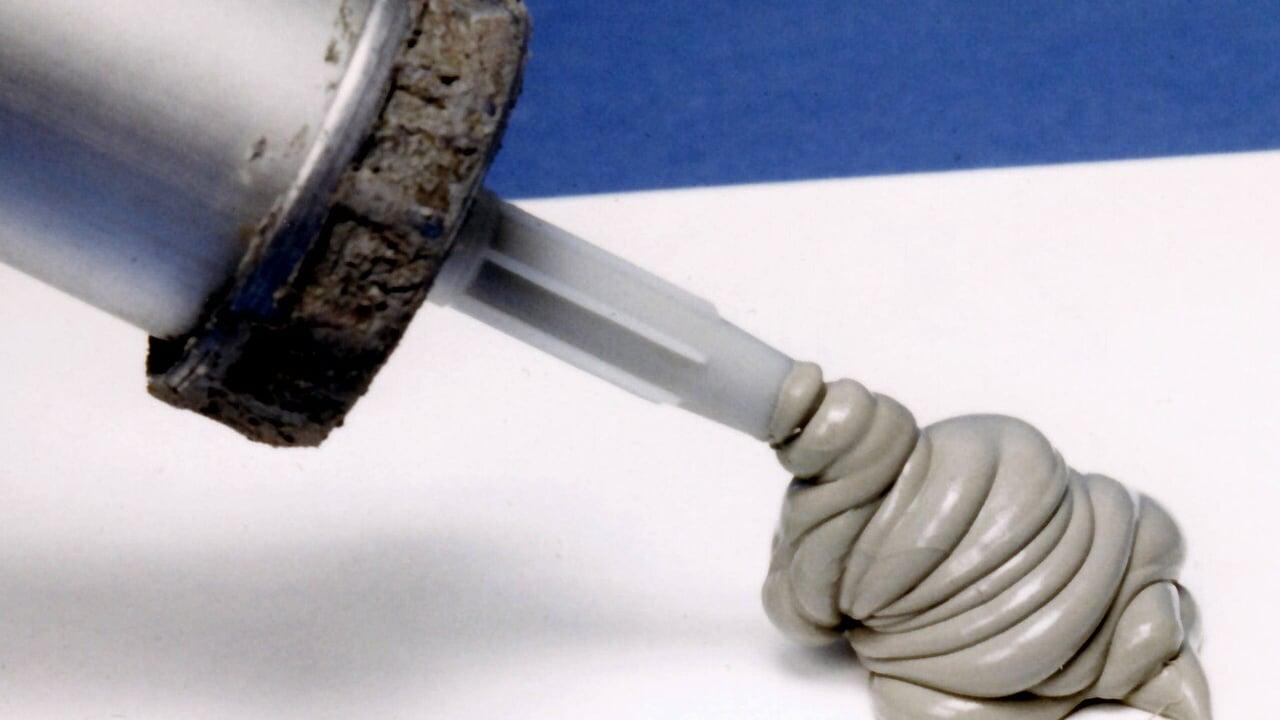
Top photo: a sealant gun, by Achim Hering, CC BY 3.0, via Wikimedia Commons, cropped.