
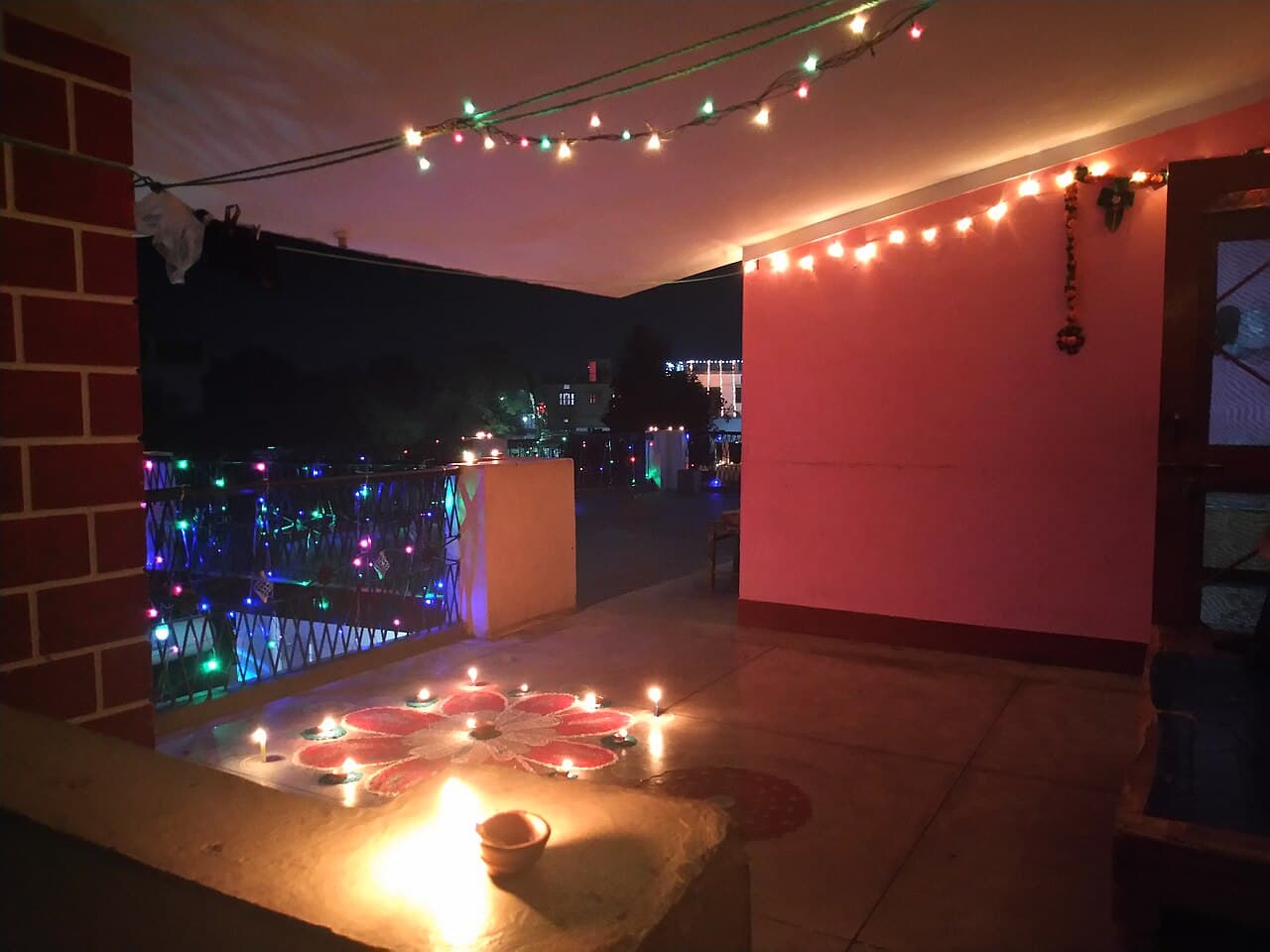
Why Do Homes Get Painted Before Diwali?
A fresh coat of paint before Diwali does two jobs at once. Culturally, repainting is part of the festival itself: homes are cleaned and renewed to welcome Goddess Lakshmi, and Asian Paints describes fresh paint as washing away the dullness of the past year, the same way Diwali marks light winning over darkness. Practically, the timing works in your favour. The festival lands just after the monsoon withdraws from North India, which is when your walls finally dry out. October to February is the window Indian painters prefer, because lower humidity lets emulsion cure properly instead of trapping moisture under the film. In Gurgaon, the weeks between the end of the September rains and Diwali in early November are peak season for Diwali home painting, and every crew in the city knows it. If you are planning a repaint for your flat in DLF Phase 3 or your builder floor on Sohna Road, this is the season the whole trade organises itself around.
When Do You Need to Start Painting for Diwali 2026?
Diwali falls on Sunday, 8 November 2026, with Dhanteras on 6 November. Working back from there, crews need to finish by the last week of October. Asian Paints advises starting two to three weeks before the festival, so paint gets time to set and you still have days left for decoration. That puts the start date around mid-October for most homes. Two numbers explain why the buffer matters: primer needs a minimum of 3 hours before anything goes over it, and each emulsion coat needs 6 to 8 hours, sometimes more, before the next one, according to Houzz India. Compress those windows and you get patchy sheen. There is also a money angle to moving early: booking painting work in August or September typically costs 10 to 15 percent less than in the festive rush, when contractor demand peaks. Book the crew now, schedule the work for mid-October, and you collect both the discount and the slot.
How Much Does Diwali Painting Cost in Gurgaon?
As of 2026, interior repainting in Delhi NCR runs ₹12 to ₹18 per sq ft with an economy emulsion, ₹22 to ₹32 with a standard emulsion, and ₹28 to ₹40 for premium finishes, according to Aapkapainter's Delhi cost data. Putty and primer add another ₹5 to ₹8 per sq ft. Here is what that means for a full home. A 2BHK with 800 to 1,000 sq ft of carpet area carries roughly 2,800 to 3,200 sq ft of paintable wall and ceiling, which works out to ₹35,000 to ₹50,000 in the economy tier and ₹65,000 to ₹90,000 in the standard tier. A 3BHK lands between ₹50,000 and ₹1,40,000 depending on the paint grade. The quick rule: paintable area is about 3 to 3.5 times your carpet area. If you plan to buy the paint yourself, contractor teams charge ₹7 to ₹12 per sq ft for labour alone. For a room-by-room breakdown of where the money goes, see our guide to painting a 2BHK in Gurgaon.
Can You Really Paint a Whole Home in 9 Days?
Yes, if the team is structured for it. Houzz India's 9-day Diwali plan rests on one idea: divide the home into sections of roughly 500 sq ft and give each section two skilled painters plus two helpers. The sequence runs like this. Day 1 clears furniture and masks frames and sockets. Day 2 fills cracks and dents with putty or POP. Day 3 is sanding, plus buying the paint. Day 4 is primer. Days 5 and 6 put two coats on the ceilings, Day 7 finishes the second wall coat, Day 8 covers woodwork, grilles and accent effects, and Day 9 is cleanup and moving furniture back. The schedule works because every coat dries overnight or while the crew works elsewhere. One gotcha from the field: crews under festival deadline pressure sometimes offer to squeeze two coats into a single day. That breaks the 6 to 8 hour recoat window and shows up weeks later as roller marks and uneven sheen.
Fix Monsoon Damage Before the First Coat Goes On
Paint over a damp wall and you pay for the job twice: putty loses grip on wet plaster, and the new film bubbles or peels within weeks. After Gurgaon's monsoon, walk every room and hunt for seepage stains, flaking patches and loose plaster before any painting starts. Houzz India's plan reserves an entire day for exactly this repair work. Damp patches near bathrooms, terraces and balconies usually trace back to a waterproofing failure rather than a paint problem, so treat the source first; our monsoon-proofing checklist walks through the usual suspects. Budget ₹5 to ₹8 per sq ft for putty and primer as of 2026, plus crack filler for hairline gaps around window frames. A simple field test before you commit: tape a piece of clear plastic sheet flat against a suspect wall overnight. Condensation trapped under the plastic in the morning means the wall is still holding moisture, and it needs more drying time before putty goes on.
Which Wall Colours Work for Diwali?
The traditional Diwali palette carries meaning: red stands for celebration, green for new life and luck, and gold for prosperity, as Asian Paints notes in its festive colour guide. You do not have to paint whole rooms in saturated colour to get the effect. Current festive combinations lean on a neutral base with one statement wall: soft ivory with gold accents, warm beige with red highlights, or a deep green accent wall in the living room. Berger Paints builds its Diwali palettes around vibrant reds, shimmering golds, forest greens and cool silvers for the same reason. Texture and metallic finishes earn their keep in November: a textured accent wall catches the light from diyas and fairy strings and shifts as the flames move. For a lighter touch, Asian Paints points to crisp white walls with golden borders, paired with brass lamps and diyas. The accent wall route also protects your budget, since only one wall per room gets the pricier finish while the rest take standard emulsion.
How Much Paint Will You Actually Need?
Start from the 3 to 3.5 multiplier: a 1,000 sq ft carpet area home carries 3,000 to 3,500 sq ft of paintable surface, and two coats mean covering it twice. As of 2026, a 20-litre bucket of economy emulsion costs ₹2,800 to ₹3,200, a premium 20-litre bucket runs ₹6,500 to ₹7,500, primer sits at ₹2,200 to ₹2,800 for 20 litres, and a 40 kg bag of wall putty costs ₹1,400 to ₹1,700, per Aapkapainter. To convert your wall area into exact litres, coat by coat, use the method in our paint quantity guide. One tip painters rarely volunteer: check that every bucket of a colour comes from the same manufacturing batch number, because shade can drift slightly between batches and the difference only becomes visible once two batches meet mid-wall. Running short mid-job is the usual way mismatched batches sneak in, which is where HandyPanda's under-60-minute paint delivery across Gurgaon closes the gap.
DIY Accent Wall or Full Painter Crew?
Scale makes this decision for you. A single accent wall is a genuine weekend project: one wall, one litre or two of emulsion, a roller kit and masking tape. A full 2BHK before Diwali is a crew job, because the putty-primer-two-coats sequence across 3,000 sq ft eats 7 to 10 days even for professionals working in an occupied home. As of 2026, daily labour in Delhi NCR runs ₹500 to ₹700 for a helper, ₹700 to ₹950 for a general painter, ₹900 to ₹1,200 for a skilled painter, and ₹1,200 to ₹1,800 for a texture or stencil specialist, according to Aapkapainter's labour data. When you compare contractor quotes, ask one question: does the price include sanding and primer? Low quotes often drop the primer coat, and emulsion applied over unprimed putty reads patchy within months. For the wider renovation calendar around the paint job, our home renovation timeline guide shows where painting slots in.