
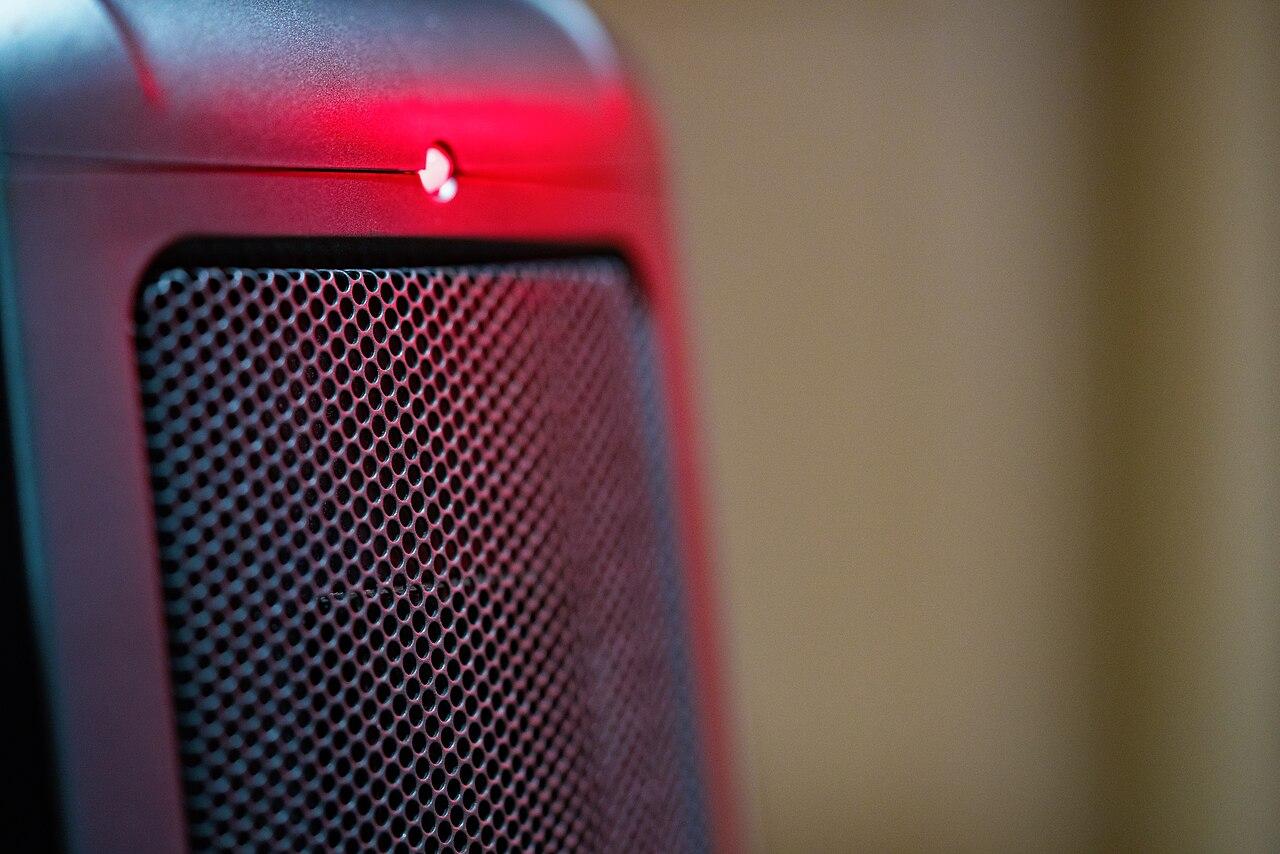
Oil Heater, Fan Heater or Halogen: How Does Each One Heat a Room?
All three run on electricity and burn no fuel. An oil heater warms the air slowly and keeps the room warm. A fan heater blows hot air and warms a small room fast. A halogen heater sends out infrared heat that warms you, not the air.
In an oil heater (OFR, oil-filled radiator), an element heats sealed oil, and the oil heats metal fins. The oil only stores heat and never burns, as Wikipedia explains. A fan heater (blower) pushes air over a hot element, so it heats a closed room faster than a fanless heater, with some fan noise (Wikipedia). A halogen heater uses quartz halogen lamps that give off infrared heat and a bright glow (Wikipedia).
Which one fits your home? The oil heater vs fan heater vs halogen choice comes down to three questions. How big is the room? How long will the heater run? Who sits or sleeps near it?
How Does an Oil Heater Keep a Room Warm?
An oil-filled radiator heats slowly and stays warm. It takes several minutes to warm up, but its oil and fins keep giving off heat after the element switches off. That stored heat makes an OFR feel even and quiet, with no fan noise (Digit). It makes no free heat, though. You pay for the watts it draws.
The fins add surface area. More air touches the heater, so each fin runs cooler than a bare element (Wikipedia). This is the heater you switch on after dinner and leave on all evening.

For a bedroom, the Havells Hestio 13-fin oil heater was ₹13,085 on HandyPanda on 20 November. Its rating is 2,900 W (Havells): a 2,500 W oil section plus a 400 W PTC fan heater for a quick start. It has a thermostat, a tip-over switch and a thermal cutout.
Tip: it weighs 13.5 kg, so roll it into place before you switch it on.
How Many Watts or Fins Does Your Room Need?
Use about 100 W of heater for each square metre of floor. That rule fits a standard ceiling and average insulation (Homebuilding & Renovating, quoting Nicholas Aukland of Trade Radiators). Add 10 to 20% for a top-floor room, poor insulation or a high ceiling.
By our calculation from that rule, you get:
- 10 x 10 ft room (9.3 sq m): about 900 to 1,100 W
- 10 x 12 ft room (11.1 sq m): about 1,100 to 1,350 W
- 12 x 14 ft room (15.6 sq m): about 1,550 to 1,900 W
- 14 x 16 ft hall (20.8 sq m): about 2,100 to 2,500 W
Read the watts on the label, not the fin count. Fins only add surface area, so they do not tell you how much heat the element makes.
A heater is too small when it runs flat out and you still sit close to it to stay warm. One that is too big clicks on and off every few minutes.
When Is a Fan Heater the Right Choice?
A fan heater suits short, fast heating in a small room. Switch it on ten minutes before your bath, or before you sit down to work in a cold study. The fan carries heat out of the body, so the unit can stay small without overheating. A 2 kW rating is common in 230 V countries such as India (Wikipedia). So check the watts on the label, and match them to your room size.
A fan heater is also light to carry from the bedroom to the study and back.
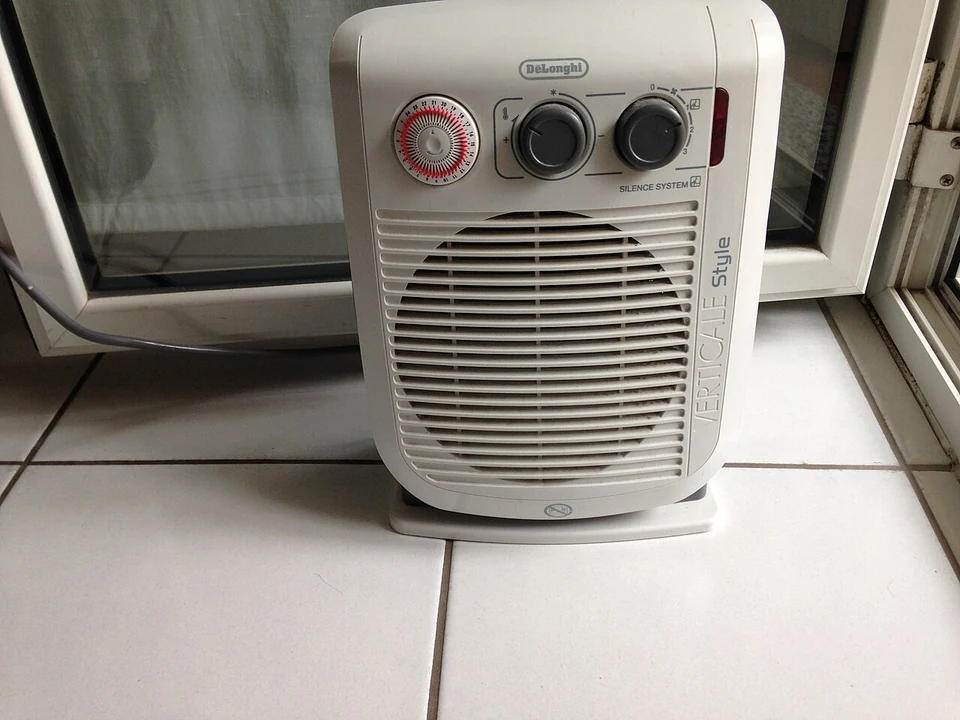
Photo: Antonio Mette, CC BY-SA 4.0, via Wikimedia Commons
The trade-offs are noise and moving air. A fan heater makes noise and keeps air moving the whole time it runs (Digit). It also stops heating the moment you switch it off, because it stores no heat.
Keep a fan heater well away from the shower and any wet floor. Read its manual for the gap it needs from walls and furniture, and keep that gap clear.
Where Does a Halogen Heater Work Well?
A halogen heater warms the person in front of it, not the whole room. Its lamps give off infrared radiation, which warms skin, clothes and furniture in its line of sight. The lamps hold a small amount of halogen gas, so the filament runs hot for longer and gives a bright light (Wikipedia). The glow stays on while it runs, so a dark bedroom does not stay dark.
So it suits a spot where you sit still: a work-from-home desk, a study chair, or the puja corner in the early morning. It also helps at one end of a large hall that a single oil heater does not fully warm. You feel the warmth within seconds of switching it on. Step out of its beam, and the warmth stops.
The lamps also run at high temperature behind the front grille, so keep cloth, paper and small hands well away from that grille.
Which Room Heater Dries the Air the Least?
No electric heater removes water from the air, but every heater lowers the relative humidity. Warm air can hold more water vapour, so the same amount of water reads as a lower percentage (Wikipedia). What you feel as dryness depends on how the air moves.
A fan heater blows warm air across your face and eyes the whole time it runs. An oil heater heats by slow convection, so the air moves gently. A halogen heater moves little air, because it heats by radiation. Infrared heating does not dry the air (De'Longhi, which sells infrared heaters).
Electric heaters also burn no oxygen. So people use oil heaters, fan heaters and heat pumps in bedrooms, where a gas heater with no flue is unsafe (Wikipedia). If someone at home still lights an angithi on cold nights, our room heater wiring guide explains its carbon monoxide risk.
Which Room Heater Uses the Least Electricity?
At the same setting, all three use the same electricity per hour. Every electric heater turns almost all of its watts into heat. Even the power for the fan motor ends up as heat, so the efficiency stays at 100% (Wikipedia). A 2,000 W heater on full power for one hour uses about 2 units, as Digit works out.
So your bill depends on how many hours the element stays on, not on the type. A thermostat switches the element off once the room reaches your set temperature. A heater sized to the room reaches that temperature and cycles off. An undersized one runs flat out all evening. A closed door keeps the heat in the room you pay to warm.
The halogen heater is the exception for one person. It warms you at a desk without heating the whole room. To see what a heater adds to your Haryana bill, the cost section in our room heater wiring guide works it out.
Which Heater Is Safer Around Children and Pets?
Every heater gets hot, but the risks differ. A halogen heater and the grille of a fan heater are small, very hot surfaces at hand height. An oil heater spreads its heat over a large fin area, which keeps the surface cooler (Wikipedia). Its fins still get hot, so keep a toddler from leaning on one.
Look for these safety features, all listed on the Havells Hestio page:
- a tip-over switch, which cuts power if the heater falls
- a thermal cutout, which switches it off if it overheats
- a rear safety cover over the element area
Keep any heater about 3 feet (90 cm) from anything that can burn, such as curtains, bedding and sofas. That is US Consumer Product Safety Commission advice, cited by Digit. Plug it straight into a wall socket. Switch it off when you leave the room or go to sleep. Thinking of leaving it on overnight? Our room heater wiring guide covers sleeping with a heater on.
Which Heater Suits Which Room in a Gurgaon Home?
Match the heater to the room and to how long it runs:
- For a bedroom in the evening, run an oil heater sized to the room, with a thermostat.
- Before a bath, switch on a fan heater for 10 to 15 minutes, and keep it outside the wet area.
- At a study chair or in the puja corner, point a halogen heater at where you sit.
- A living room or hall over 20 sq m needs one oil heater of 2,500 W or more, or two smaller heaters in different corners.
- On a top floor under an open roof, add 10 to 20% to the 100 W per sq m figure.
Tip: close the door and draw the curtains in the room you heat. An open door, draughts, or furniture and drying clothes in front of the fins can make a correctly sized heater seem too small (Homebuilding & Renovating). If the clothes stand sits in front of the heater, move it.
What Do You Check Before Buying a Room Heater?
Before you pay at the counter, check these five things on the box and the rating label:
- ISI mark. Room heaters are on the BIS list of products under compulsory certification (BIS Scheme I), so a heater sold in India needs the ISI mark.
- Watts. Match them to your room at about 100 W per sq m.
- Thermostat. It cuts the hours the element runs.
- Tip-over switch and thermal cutout. Both switch the heater off when something goes wrong.
- Plug. A heater of 1,500 W or more needs a 16 A plug and socket, as our room heater wiring guide explains.

Is the heater from last winter still in the loft? If its plug is cracked or loose, a Havells 16 A top plug was ₹126 on HandyPanda on 20 November. Browse heaters, plugs and sockets in our electricals range, delivered across Gurgaon.
Read More
- Wikipedia: Oil heater →
- Digit: Fan heater vs oil-filled radiator, what is the difference →
- Homebuilding & Renovating: What size oil-filled radiator do I need? →
- Havells: Hestio 13 Wave Fins oil-filled room heater →
- BIS: Products under compulsory certification (Scheme I) →
- Hero photo: Tony Webster, Electric Ceramic Space Heater, CC BY 2.0, via Wikimedia Commons →